How to Budget for a Cruise (Based On Virgin Voyages Cruise Cost)
If you’ve been wondering how to budget for a cruise, especially as a first-timer, this post breaks it all down with real numbers and real spending from my last Virgin Voyages cruise.
For starters, this post is by no means sponsored. I had a lot of questions with little answers up-front and ended up learning a lot from my first cruise with Virgin Voyages. Therefore, I figured many others had the same questions, so I decided, you know what? I’m going to write the post that I wish someone else had written before I went on my first cruise with Virgin.
So, let’s get into it!
This site contains affiliate links. These help fund my blog site at no extra cost to you. View the disclaimer for more information.
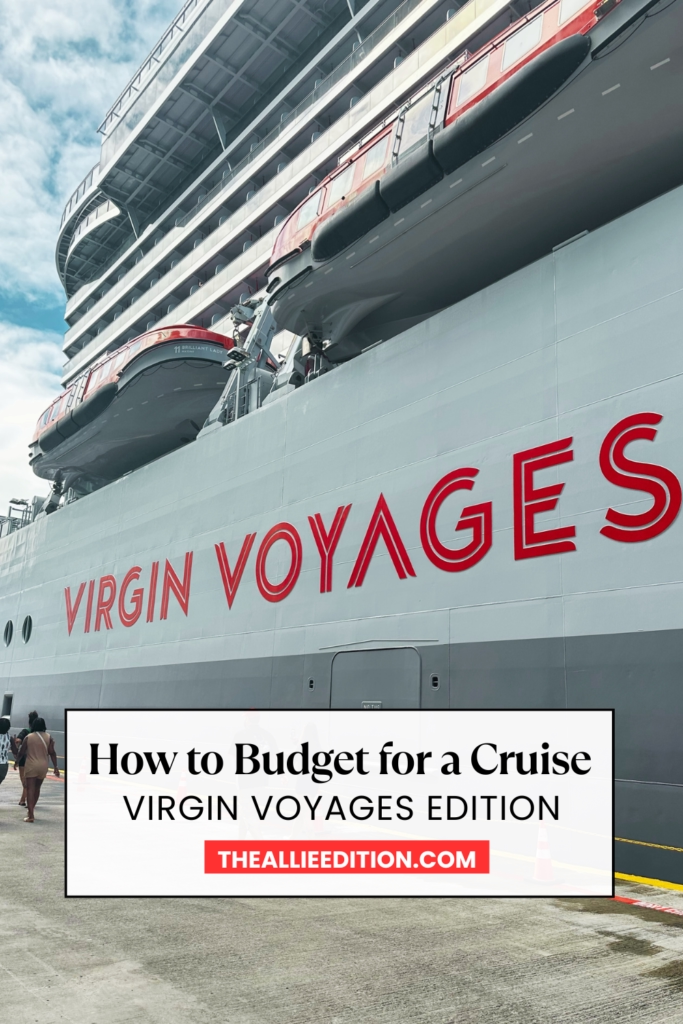
This year I will be going on my second voyage with The Virgin Voyages to travel throughout Alaska and Canada. I absolutely loved my first cruise with this cruise line; their staff was phenomenal, I met so many amazing people, and the excursion crew operated like a well-oiled machine–making the entire trip feel especially safe as a solo female traveler. Since my upcoming trip is to Alaska, I’ll also be sharing my Alaskan cruise budget with you as an example.
My first cruise with them, I made a budget and while I stayed mostly within my planned budget, I did end up going a little over. So this blog is to share what I learned from my first cruise and how I will plan to budget for my upcoming cruise this year.
If you are also going to be cruising this year, here’s everything I recommend to help you learn how to budget for a cruise realistically. This may vary cruise line by cruise line but you can always do a little extra research to see what others are saying based on which cruise line you go with.
We’ll start with what you need to include in your budget, then end with a breakdown of how to pull this altogether and determine how much to save for your cruise based on your budget.
12 Things to Include In Your Cruise Budget
Here are 12 things to consider when planning for your upcoming cruise:
1. Base Cruise Fare
For Virgin Voyages, I saved money on my upcoming cruise by booking while onboard my last cruise. When you do this, you get free Sailor Loot, which is essentially onboard credit that can go toward food, drinks (including alcohol), excursions, and more.
I also happened to be cruising during Thanksgiving, and at the time they were running a huge sale on future voyages, which helped lower my overall cabin fare. If you can, I highly recommend booking during a major sale. Virgin Voyages runs this sale every year.
2. Crew Gratuities
Virgin Voyages no longer includes gratuities in the base cruise fare. This is an additional charge that must be paid either before boarding or at the end of your cruise.
• Prepaid: $20 per person, per day
• Paid onboard: $22 per person, per day
For a 7-day cruise:
- 1 person: $20 × 7 days = $140
- 4 people: $20 × 4 × 7 days = $480
If you can, prepay to save a little.
3. Excursions
One of the biggest questions people ask when learning how to budget for a cruise is how much excursions actually cost. For Virgin Voyages, I recommend budgeting around $150 per person, per excursion. Not all excursions are this expensive, some are only about $80-100 but it is better to come under budget than over budget. Plus, the additional budget could always go towards souvenirs as you’re wrapping up your excursion.
4. Excursion Accessories
If you’re wondering how much to budget for cruise excursions, don’t forget to also budget for excursion gear and accessories! Pay attention to the types of excursions you book and what gear you’ll need. Here’s how I planned for mine:
Reference: This was their Sunny San Juan & Isles of Beach Miles cruise on Brilliant Lady
Horseback, buggy rides & beach swim with lunch (6.5 Hours)
For this excursion, I purchased:
- This face mask with ear loops to protect my face from the dirt/sand during dune buggy riding (I highly recommend the ones with ear loops so they don’t fall down during riding. I have found that the style with no ear loops falls down easily and is less comfortable for breathing.)
- These ATV dustproof, foam-lined goggles to protect my eyes for the same reason
- Long sleeve cover-up. I got this idea from Reddit reviews and while I was skeptical due to how hot it was going to be during the time of my excursion, I am actually so happy I bought one. I just wore a flannel long-sleeve like this one that I could leave unbuttoned and just throw over my crop top. Was it hot? Absolutely. But did I burn from being under the sun for 6.5 hours? Nope. Plus, it saved me from getting mud all over my arms during the dune buggy riding. That was a win-win for me! (Don’t worry, the mud washes off super easily)
If you’re wondering, do I really need to buy some of these things now or can I just wait until I get there? Here’s my honest response: Tour guides may sell gear, but I prefer buying my own so I’m not forced into low-quality options. For example, the masks sold on my tour were extremely tight with no breathing holes, and goggles weren’t sold at all.
Now, you can wear sunglasses but these foam-lined goggles off Amazon will do a much better job protecting your eyes from getting dirt in them (and from experience, it sucks trying to keep your eyes open while riding with dirt in your eyes).
On another note, I also read reviews saying I needed 1-in heeled boots and thick pants for horseback riding. On the contrary, I wore Converse and thin leggings with zero issues. Just wear what’s comfortable for you and allows you to flexibly get on the back of a horse!
ATV tour to Maho beach (3.5 hours)
For this excursion, I purchased:
- These ATV riding gloves off Amazon because I read many reviews about how much it can hurt your hands to grip onto the ATVs for long periods of time. I wasn’t convinced until the day came, and there I was trying to grip onto the ATV handlebars for the first time. Let me tell you, as a woman with small, thin hands, this was not as easy as I expected. But having these gloves should help to relieve your fingers of the tight grip.
- I also wore glasses during the ATV tour because again, you have dirt specks flying into your eyes. Not only that, but on my tour it ended up raining a bit and let me tell you–water droplets also hurt a lot when they hit your eyes during high speeds. You can wear any pair of glasses, like sunglasses, or choose to wear a pair of goggles. Sunglasses worked just fine for me since this tour was on regular roadways. But if you are riding in dirt/mud, I highly recommend the foam-lined goggles.
Sea turtle swim & snorkel (1.5 hours)
For this type of excursion,…
- I highly recommend bringing a long sleeve bathing suit or swim top when snorkeling since you will be under the sun and likely to burn more due to the sun reflecting on the water. I absolutely love this women’s long-sleeve one piece because it has UV protection, is extremely comfortable and super cute. I wear this for my snorkeling, kayaking, and all-day boat excursions so I don’t roast in the heat haha!
- Reef safe sunscreen (Blue Lizard is my favorite). I actually didn’t even know “reef safe” sunscreen was a thing until visiting the Florida Keys but it turns out, regular sunscreen has harmful toxins in it that is not safe for coral reefs. So if you book a snorkeling/swimming tour, make sure to check out reef safe sunscreen options!
Culture, cocktails & culinary delights (3.75 hours)
Since this involved lots of walking, I didn’t want anything heavy. I recommend…
- A fanny pack or money wallet. It also helps reduce pick-pocketing risk, which can be common in tourist areas. This fanny purse is a personal favorite given how cute it is while also staying secure around the waist. But if you want to travel super light and only need to carry money, I highly recommend sticking to a thin money wallet like this one.
5. Other Accessories
- If you are in a cabin that’s closer to decks 7&8 front/midship, I recommend ear plugs like these because it can get really noisy late at night when people are still clubbing until 2am.
- Cruise bathrooms are very small. If you haven’t been in one before, it’s typically the size of two bathroom stalls combined. That’s it. That means your counter space is super limited. Therefore, I recommend getting a hanging toiletry bag like this one to maximize the space you have.
- This next one is close to my heart. I have traveled over the last 6+ years and on my last cruise, my mom decided to surprise me with a travel diary where I can document all my travels. How amazing! I wish I thought of this sooner. So, if you are a traveler at heart and aren’t already documenting your travel stories to share down the road with friends and family, or even to look back on for yourself, I highly recommend this. It’s now become a special part of my travel, something I look forward to opening up each night.
- This last one is about safety–especially for my solo travelers. There’s not many safety accessories you can take with you on cruises and flights. However, I recently learned about this personal safety alarm made for women which is a key chain that sounds an alarm when you pull on it. As a female traveler, I am absolutely getting this as an extra layer for protection because I have been in multiple uncomfortable situations while traveling and this seems to be a great safety precaution for when you need to quickly scare someone away and/or grab others’ attention.
6. Onboard WiFi
Unlike many cruise lines, Virgin Voyages actually offers free basic WiFi while onboard. However, since I work remotely, I choose to upgrade my WiFi and pay for their “Work from Sea” option. This one is$50/day for 1 device only (+$25 for each additional device) or they offer a flat-fee if you purchase it for your entire voyage. This ended up being cheaper on my last cruise which was 9 days so I ended up paying for the flat fee of $210.
If you want tips on balancing work and travel while working remotely, check out my guide to work-life balance for remote workers.
7. International Service
I use AT&T, which charges $10 per day for international service. Personally, I only used my phone while onboard, so I didn’t need this. That said, I still recommend budgeting for it just in case. You never know.
If you also use AT&T as your service provider, there is no setup needed in advance. You just use your phone as normal when you travel and it will automatically add to your plan and charge you for each day. Talk to your service provider to find out what your options are and what advanced setup is needed.
8. Onboard Spending
Virgin Voyages offers a TON of free food, drinks, amenities, and so forth. You could absolutely go on the cruise and enjoy yourself without spending another dime. So, if you’re asking yourself how much spending money do you need for a cruise, don’t overestimate this one (at least on a Virgin Voyages cruise).
That said, I still saw plenty of people diving into the up-charged offerings on the cruise. If that sounds like you, let’s break down what that could look like from a budgeting perspective.
Food & Drinks
Virgin Voyages includes dining in your cruise fare, but alcohol and certain food and drink options cost extra.
On my last cruise, I budgeted $300, but only ended up spending $85.72. This gave me a much clearer idea of how much spending money for a cruise actually makes sense for my travel style. I found there were more than enough free food and drink options to choose from that I didn’t feel the need to spend more. I also don’t drink much alcohol, which helped.
Drinks onboard are usually about $10 each, give or take, and they offer drink packages that are usually closer to $200-300 if you wish to include this in your budget.
One thing I love is that the Virgin Voyages app tracks your spending. You can check your tab every night to make sure you’re staying within budget.
How this works:
You receive a bracelet at check-in that’s linked to your room and credit card. You use it as your room key and to pay for everything onboard. Each purchase shows up in the app under your virtual tab.
Onboard Events/Activities
Again, Virgin Voyages offers tons of free onboard events, but there are also limited-seat events that cost extra (paint and sips, themed dinners with shows, auctions, etc.).
Some events appear in the app before boarding, but others don’t show up until you’re onboard.
I personally didn’t feel the need to pay for these since there was already so much to do for free. However, if this sounds appealing to you, I’d budget $50–$80 per person per event, or about $200–$250 total per person if you plan on doing 2–3 events.
If you tend to overspend on trips, this is where having a solid budget system matters most. I shared a few simple ways to stay organized in these personal finance organization tips.
9. Passport
If you have never traveled internationally before and do not need a passport, make sure to include this in your budget. In Florida, this currently costs $165 for an adult.
On the flip side, if you have a passport but it expires within 6 months of your cruising date, you will need to renew your passport prior to boarding. In Florida, this currently costs $130 for a passport book, $30 for a passport card, or $160 for both.
10. First-Aid Kit
Yes, there is an infirmary on board if you don’t bring your own mini first aid kit. However, my experience going to the infirmary felt much like an urgent care visit where you have to sit in the waiting room for a bit, fill out a bunch of forms, and go through all these hoops just to get ibuprofen. I recommend packing the essentials in a mini pouch and carrying this whenever you travel. Here’s what I carry in mine specifically when cruising:
- Excedrin (for headaches or muscle aches)
- Dramamine (for motion sickness)
- Pepto (unfortunately, many people get stomach bugs or upset stomachs while cruising so I always bring this with me as a precaution)
- Benadryl (I have allergies, so this is a must!)
- Zinc (keeps my immunity up and fights potential colds while onboard)
Note: I am not a medical professional so this list is for educational purposes only. Please speak to a doctor and do your own research when curating your own first-aid travel kit. The list above is what works for me. You must do what works for you.
11. Transportation & Lodging
How much you budget for this is going to depend on a handful of factors, mainly being how far away the port is from you. I am going to give you two case scenarios.
Scenario 1: Port is within driving distance
My first cruise with Virgin Voyages went out of Miami which was only a ~3 hour drive for me. In this case, I did not budget anything for flights or hotels. All I budgeted for was gas, tolls, and parking.
- Gas: $30 (full-tank) lasted me to and from the port
- Tolls: $25 (this is my default amount for toll budgeting unless I am going on a long roadtrip)
- Parking: $200 flat fee for stays of 7+ days. Otherwise Port Miami charges $22-35/day depending on which garage you park in (Virgin Voyages is Garage G which charges $25/day).
I parked directly at Port Miami for safety and convenience. While some people park farther away to save money, that felt overly complicated and less secure for me as a solo traveler.
Scenario 2: Port distance requires a flight
My upcoming cruise only goes out of Seattle, Washington which is out of state for me. In this case, I am budgeting for gas, tolls, a round-trip flight, taxis and a hotel.
- Gas: $30 (to/from airport)
- Tolls: $25
- Taxis: $160 round-trip
- Flight: $555 round-trip
- Hotel: $200 (1 night pre-cruise)
For gas, this is accounting for a family member that is taking us to the airport. The taxi then accounts for the driver taking us to/from the airport to the cruise terminal. For hotels, we’re skipping a post-cruise hotel since the ship returns at 7am and our flight is later in the day. We will have plenty of time to grab lunch and get to the airport before flying back home.
Pro Tip: How I Get Free Flights & Hotels
I booked my flight and hotel for free using travel credit card points—no joke. I put all my everyday purchases on this card and only use my debit card to pay off the balance in full each month.
If you’re disciplined with your money, this system is a game-changer. I travel every year using points to redeem free flights and hotels, and the points are worth 25% more when used for travel. That means a hotel that would normally cost $100 only costs $75 in points.
The card is so good I’ve even got friends and family hooked on it. If you’re ready to start traveling smarter and saving on flights and hotels, this is the exact travel credit card I use.
12. Cruise Outfits
Lastly, Virgin Voyages has Scarlet Night, where everyone wears red and parties all night. Other cruise lines have themed nights too (for example, Disney’s pirate night).
If you already know you’ll want new outfits, budget $50–$300, depending on how many nights you’re cruising and how much shopping you plan to do.
My girls who “never have anything to wear” will understand this one.
How Much to Save for a Cruise
Now begs the question: How much do you need to save for your cruise and how can you incorporate this in your budget?
This is where everything comes together. Once you understand how to budget for a cruise, figuring out how much to save each month becomes simple. It’s important to note that Virgin Voyages requires a 20% deposit at the time of booking. Then, full payment is due 120 days before your sailing date. In the table below, this is exactly how I organized my Alaska cruise budget.
Important Note: This budget is for 2 people for a 7-night Virgin Voyages cruise. Take what’s relevant to you, and leave the rest.
First I calculated the following (also denoted in the email from Virgin Voyages after you book the cruise):
- Total Cruise Fare (cruise only): $4,280
- Deposit Paid (20%): $735.20
- Balance Due (120 days before sailing): $3,544.80
I’m going to use “balance due” and incorporate that in my budget. If you are trying to budget for a cruise before booking it and paying the deposit, simply use the total cruise fare amount posted on the website and keep in mind that you’ll need to pay 20% up-front when you actually book the cruise.
This method works whether you’re planning a weekend sailing or a longer trip and want a clear answer for how much to save for a cruise.
Alaska Cruise Budget Example
Below is a full breakdown of how I built a realistic Alaska cruise budget, including everything from travel to onboard spending.
| Description | Planned Budget (Fill in only what applies to you) |
| Basic Cruise Fare | $3,544.80 |
| Flight | $1,110 |
| Hotel | $300 |
| Gas & Tolls | $55 |
| Parking | N/A |
| Taxis | $160 |
| Passport | N/A |
| Crew Gratuities ($20/person per night, paid in advance) | $280 |
| Onboard WiFi (Wifi at Sea upgrade) | $210 |
| Offboard International Service (AT&T does not charge for Canada with our specific plan) | N/A |
| Onboard Spending (Food, Drinks, Souvenirs, Events) | $350 |
| Excursions ($150/person x 3 port days) | $900 |
| Excursion Accessories & Gear | $100 |
| Cruise Outfits | $400 |
| Misc. Accessories | N/A (already have what I need from regular household supplies) |
| First Aid & Travel Essentials | N/A (already have what I need from regular household supplies) |
| TOTAL PLANNED BUDGET | $7,409.08 |
Then, simply take the total planned budget amount and divide it by the total # of months you have until your cruise date. For example, if I have 11 months from the time of booking to the time of my cruise, I’ll take $7,409.08 / 11 months = $673.56/month.
This means I need to save $673.56 per month to achieve a total savings of $7,409.08 before I set sail. Breaking it down monthly is my favorite way to approach how to budget for a cruise without stress. If staying consistent is your biggest struggle, here are 11 tips you can use to stay on track and keep motivated with your finances.
Here’s an example payment schedule if I booked my deposit in November, then plan to use the next 11 months to save, with my cruise being the following November:
| # Month | Month | Amount to Save |
| N/A | November | 20% deposit paid |
| 1 | December | $673.56 |
| 2 | January | $673.56 |
| 3 | February | $673.56 |
| 4 | March | $673.56 |
| 5 | April | $673.56 |
| 6 | May | $673.56 |
| 7 | June | $673.56 |
| 8 | July | $673.56 |
| 9 | August | $673.56 |
| 10 | September | $673.56 |
| 11 | October | $673.56 |
| N/A | November | Set sail! |
Conclusion
That’s everything! This is why I love budgeting for travel ahead of time. Instead of stressing about thousands of dollars at once, you’re intentionally setting aside a manageable amount each month so you can fully enjoy your trip when the time comes.
This approach completely changed how I think about how to budget for a cruise, especially when it comes to travel that spans multiple months of saving.
I hope you have an amazing time on your cruise! If you have any questions, feel free to drop a comment down below or send me an email.
For more budgeting tips, check out my other posts here.